Lead (Pb) Inspection, Testing & Risk Assessment Services
Field Accreditations
What is Lead?
Lead is a heavy metal that has been widely used in a variety of industrial applications, most notably as an additive in paints, plumbing pipes, and gasoline. While its use has been greatly reduced, lead still poses a significant health risk. Lead is found particularly in older homes, buildings, and products.
Where is Lead Found?
Lead may be found in a variety of places throughout your home, place of business, and your environment. Due to its durability, malleability, and waterproofing qualities, lead has historically been used in a variety of building materials and can be found in places such as:
- Paint
- Dust
- Plumbing pipes
- Soil contamination
- Tile glaze
- Caulking
- Flashing

Lead (Pb) Field Inspections & Risk Assessments
Criterion Labs specializes in:
- Lead-Based Paint Inspections
- Lead Risk Assessments
- Elevated Blood Lead Level Investigations (EBL)
- Lead Dust Sampling
- Lead Inspections for Philadelphia and Norristown Lead-Safe and Lead-Free Certification
- Specification design for abatement and interim
- Monitoring for Lead Renovator, Repair, and Paint (RRP)
- Lead clearance post-remediation
Lead (Pb) Inspections
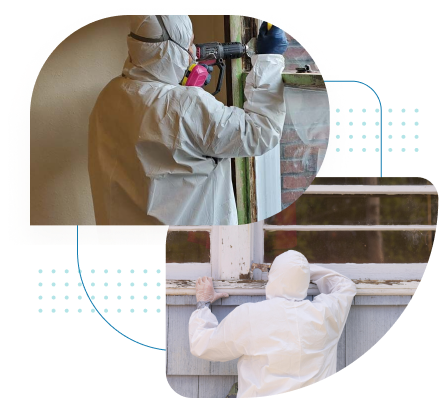
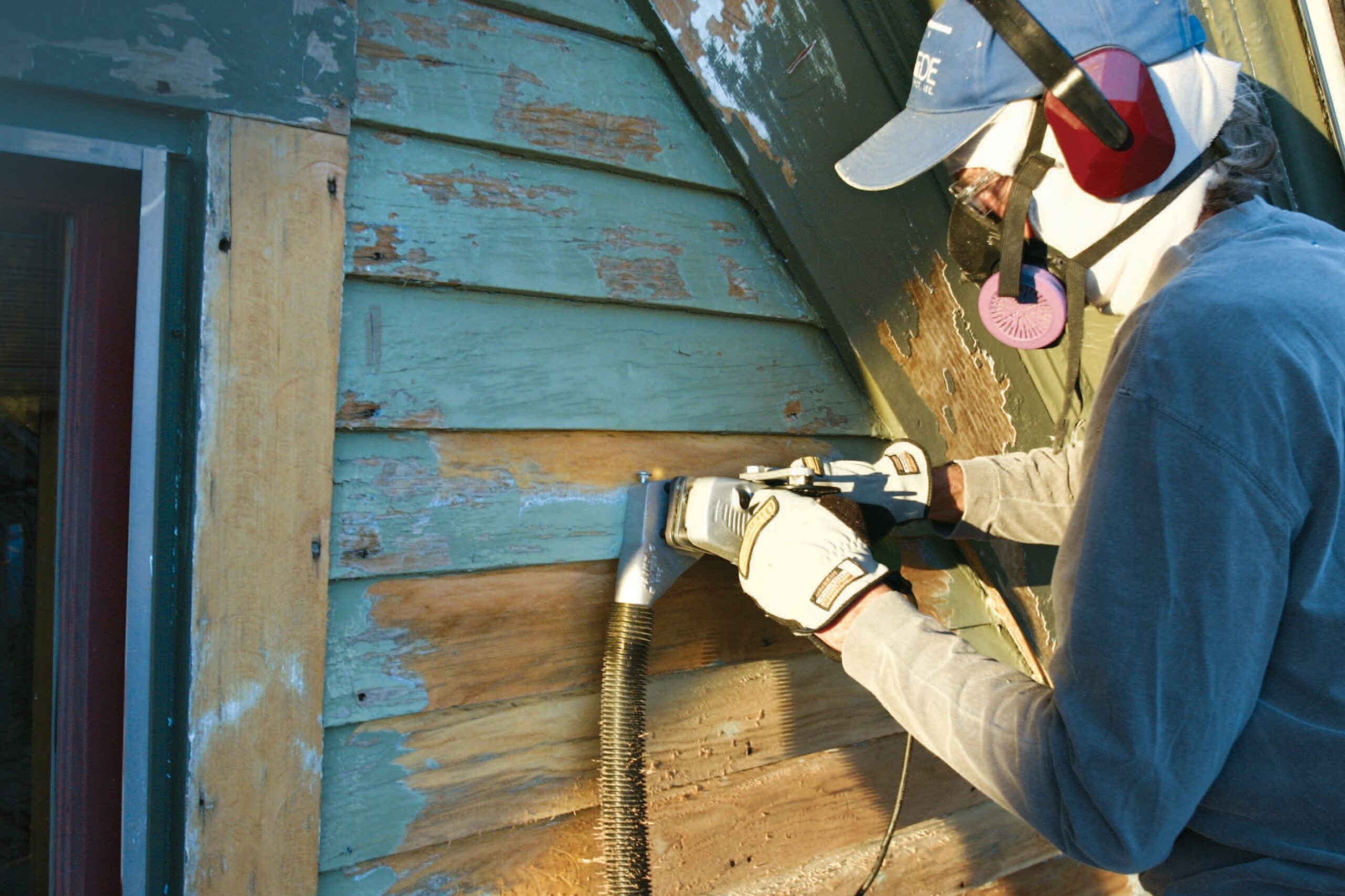
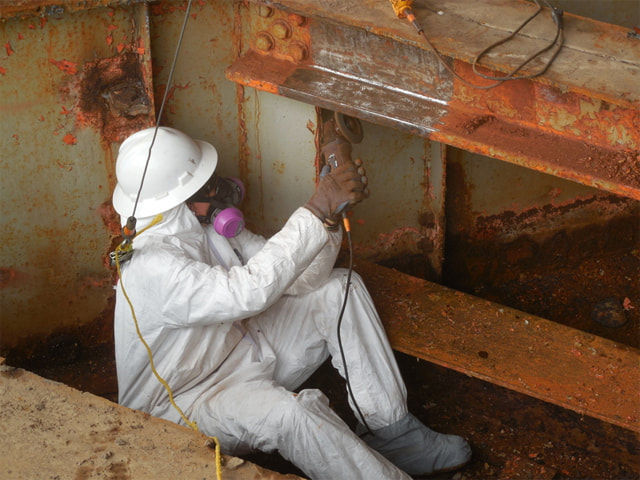
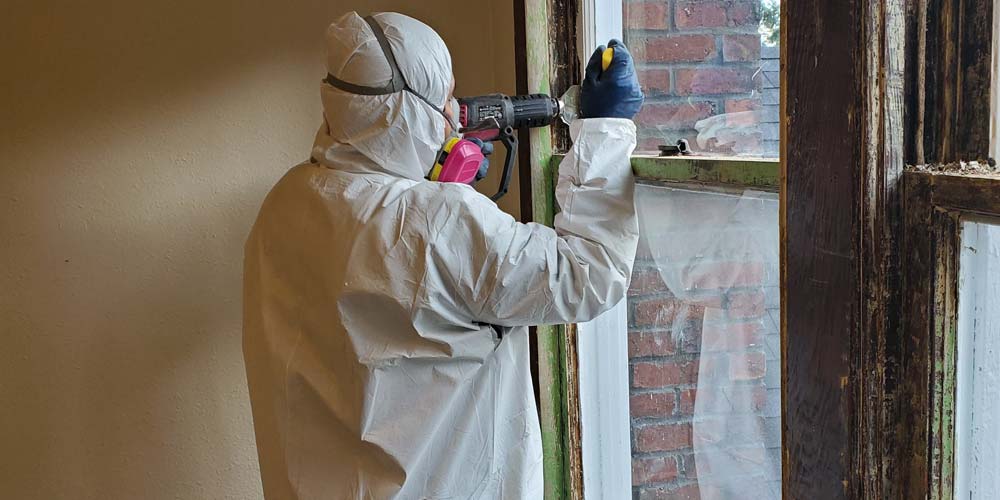
Criterion’s lead inspections aim to identify the presence of lead-based paint and residual dust in residential, commercial, and industrial properties. Our certified lead inspectors use advanced techniques and equipment to identify lead hazards. After the lead inspection, a detailed report is provided that outlines the location, condition, and recommendations. These inspections are essential for ensuring compliance with safety regulations and for planning effective remediation strategies.
A Lead-Based Paint Inspector will answer the following questions during a Lead inspection:
- Does my home have Lead-Based Paint?
- If so, where is the Lead-Based Paint?
Lead Exposure Risk Assessment
Criterion Labs offers comprehensive lead risk assessments to evaluate the potential for lead exposure in your environment. Our experienced Lead Risk Assessors conduct detailed investigations; these include visual inspections and environmental sampling to identify and quantify lead hazards. We then provide actionable recommendations to mitigate risks to help you create a safer environment for all occupants. Our risk assessments are crucial for property owners, managers, and developers seeking to address lead hazards.
A Lead Risk Assessment provides the following:
- A thorough Lead-Based Paint inspection
- A list of sources of serious Lead exposure
- Remediation recommendations to resolve the issues
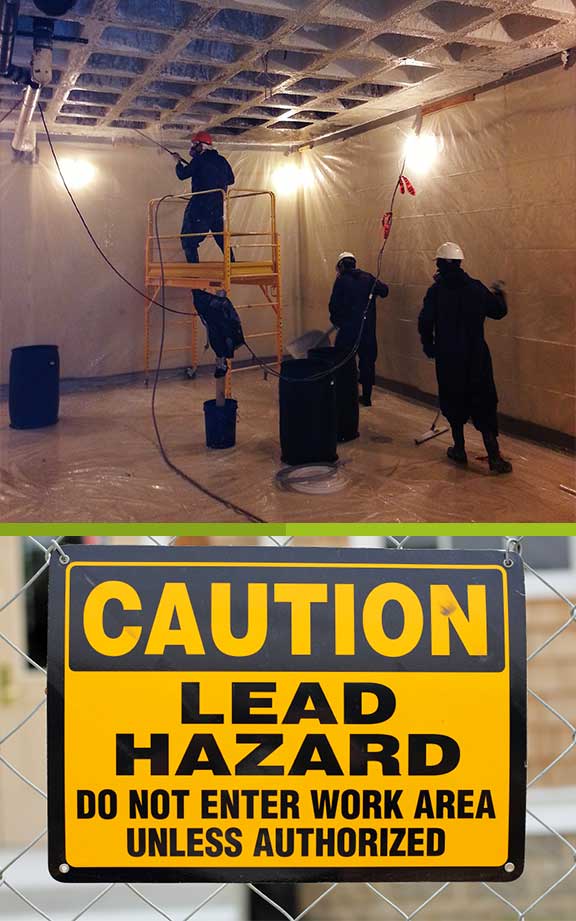

Philadelphia and Norristown Lead-Safe & Lead-Free Inspections
Landlords in Philadelphia, Norristown, and a growing list of cities must test and certify that their rental properties are Lead-Safe or Lead-Free. (click here for more information from The City of Philadelphia)
Criterion’s lead-safe and lead-free inspections verify that properties meet the stringent certification criteria through comprehensive evaluations, including visual inspections and environmental testing.
Achieving lead-safe or lead-free status not only enhances the safety and health of occupants but also adds value to your property.
Call Criterion at (215) 244-1300 to speak with a Project Manager about Lead-Safe and Lead-Free Inspections.
Lead Renovator, Repair and Painting (RRP)
Any work conducted on properties with lead-based paint must be performed safely and effectively and in accordance with federal, state, and local regulations.
Criterion’s EPA-certified Lead professionals ensure that projects are completed in compliance with EPA’s Lead Renovation, Repair, and Painting Rule and help protect occupants, workers, and the environment from the hazards of lead exposure.
Click for more information about EPA Lead RRP regulations.
Criterion’s team can provide training and expertise to ensure that your projects are handled safely – click here for more information about Criterion Asbestos and Lead Training Services.
Laboratory Testing for Lead
Criterion specializes in Lead testing in drinking water, paint, dust, soil, air, and more. Our laboratory can test your samples for lead today.
Criterion’s laboratory is accredited by:
- AIHA Laboratory Accreditation Programs (AIHA LAP, LLC, LAP-100424) under the Environmental Lead Laboratory Accreditation Program (ELLAP) – for Lead analysis in Paint, Air, Soil, and Surface Wipes.
- PADEP (Lab ID 01225) for the analysis of Lead in Drinking Water.
Call (215) 244-1300 and ask about our lead testing capabilities and pricing.
Why Choose Criterion Labs?
- Expertise: Our team is comprised of highly qualified and experienced professionals, including EPA-certified Lead Dust Sampling Technicians, Lead Inspectors, and Lead Risk Assessors.
- Compliance: We adhere to all relevant regulations and guidelines to ensure the highest standards of safety and quality.
- Comprehensive Services: From initial inspections, risk assessments to clearance testing, we offer a full suite of lead services.
- Client-Centered Approach: We work closely with our clients to understand their needs and provide tailored solutions that ensure a safe environment from lead hazards.
FAQ
What environmental matrices does Criterion Labs test for lead and lead-based paint?
Criterion Labs provides comprehensive testing across all primary media where lead hazards accumulate. We analyze samples of soil, paint chips, ambient or occupational air, settled dust (via wipes), and drinking water for residential, commercial, industrial, and public sector clients.
What scientific instruments and methods does Criterion Labs use for lead analysis?
To ensure precision and legally defensible data, our AIHA-accredited laboratory utilizes advanced analytical instrumentation:
- Laboratory Analysis: We test for lead in dust, soil, air, and water using Flame Atomic Absorption Spectroscopy and an Inductively Coupled Plasma Atomic Emission Spectrometer (ICP-AES) under EPA SW-846 3050A and NIOSH 9100 methods.
- On-Site Inspections: Our certified Lead Risk Assessors utilize state-of-the-art XRF (X-ray Fluorescence) paint analyzers. This allows us to instantly identify the presence of lead within painted surfaces non-intrusively, without damaging the property’s walls or trim.
What accreditations does Criterion Labs hold for environmental lead testing?
Criterion Labs is fully accredited by the American Industrial Hygiene Association (AIHA) Laboratory Accreditation Programs (AIHA LAP, LLC, ID LAP-100424) under the Environmental Lead Laboratory Accreditation Program (ELLAP). This top-tier national accreditation ensures our facility complies with international ISO/IEC 17025:2017 standards for testing laboratories.
What is the legal difference between a “Lead-Safe” and a “Lead-Free” certification?
These certifications represent two distinct levels of lead compliance:
- Lead-Free Certificate: Confirms that the property contains zero lead-based paint, or that all lead-based paint has been completely and permanently eliminated from the structure. This certification is permanent.
- Lead-Safe Certificate: Indicates that while lead-based paint may still be present inside the building, it is currently well-maintained and undisturbed. An EPA-trained technician has collected dust-wipe samples confirming that settled lead dust levels are below strict federal and local action thresholds, representing no immediate hazard to occupants. This certificate requires periodic renewal.
Who requires Lead-Safe or Lead-Free certifications, and what are the specific Philadelphia mandates?
Lead certifications are vital for protecting occupants, reducing property owner liability, and maintaining regulatory compliance. Depending on municipal laws, they are frequently mandatory for childcare centers, daycares, and K-12 school districts. Additionally, localized landlord laws are strictly enforced. For example, per the City of Philadelphia lead laws, landlords are required to test and certify all rental properties as either lead-safe or lead-free as a mandatory prerequisite to:
- Execute a new lease or renew an existing lease.
- Obtain or renew a city rental license.
Are contractors required to be certified if renovating a building constructed before 1978?
Yes. Under the United States EPA’s Renovation, Repair, and Painting (RRP) Rule, any contractor or property manager performing work that disturbs painted surfaces in a residential home, childcare center, or daycare built before 1978 must assume lead-based paint is present unless proven otherwise by a certified inspector. All firms and their employees must hold valid RRP certificates to use lead-safe work practices.
The Criterion Training Edge: Criterion’s Training School is fully accredited to provide official RRP certification training for contractors and their crews. Furthermore, we train and certify Lead Dust Technicians who perform the mandatory assurance testing required to prove a work zone was cleaned safely and left free of hazardous dust.
What are the new EPA Dust-Lead Action Levels and Reportable Levels?
The EPA enforces updated, highly stringent thresholds for lead hazards. The standard for a “dust-lead hazard” is set at the Dust-Lead Reportable Level (DLRL), meaning any detectable level of lead dust reported by an NLLAP-recognized laboratory is considered a hazard. Following an abatement or renovation, dust-wipes must clear the stricter Dust-Lead Action Levels (DLAL) to confirm project completion:
- Floors (including carpets): Must be below 5 (slashed from the old 10
- standard).
- Interior Windowsills: Must be below 40.
- Window Troughs (Wells): Must be below 100.